






Luxury Cars That Don’t Require Premium Gas

Increased ownership costs are a well-known burden of luxury-car ownership. Many luxury vehicles require premium fuel, or at the very least recommend it for the best performance and economy, which will have owners paying significantly more every time they fill up. Below are a couple of luxury cars — and, yes, there are only a couple left — that don’t require or recommend premium fuel and can save owners hundreds of dollars every year.
Related: Best Luxury Car of 2026
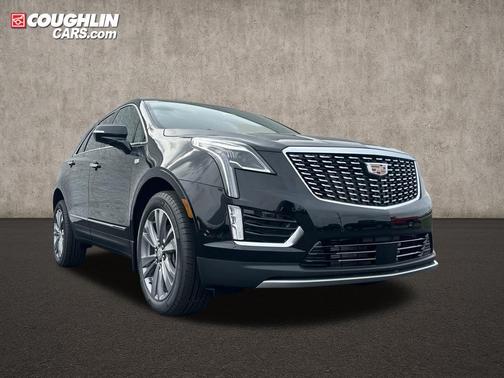
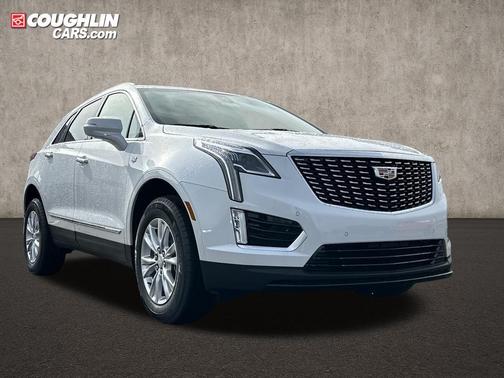
2026 Cadillac XT5
Cadillac offers the XT5 with two engine options: a turbocharged 2.0-liter four-cylinder and a naturally aspirated 3.6-liter V-6. The turbo engine requires premium fuel, but the six does not. The V-6 is a $4,075 option on the mid-range Premium Luxury trim level and standard on the top-tier Sport.
As you might expect, the turbocharged four-cylinder is more efficient than the V-6 — especially since the V-6 produces 310 horsepower to the four’s 235 hp. The four-cylinder returns an EPA-rated 22/29/24 mpg city/highway/combined, and the V-6 is rated at 19/26/21 mpg. Under normal driving conditions and at gas prices as of this writing, the 3.6-liter V-6 will save owners more than $300 in gas compared to the more efficient turbo 2.0-liter if driven 15,000 miles per year.
- ${price_badge()}
- ${ami_badge()}
- ${battery_badge()}${ev_report_link()}
- ${hot_car_badge()}
- ${award_badge()}
- ${cpo_badge()}
${price_badge_description}
${ami_badge_description}
The EV Battery Rating is based on this vehicle's current expected range relative to the vehicles expected range when new. ${battery_badge_text}
This vehicle is certified pre-owned, backed by a manufacturer warranty, and typically undergoes a rigorous multi-point inspection to ensure quality and reliability.
This vehicle is currently in high demand given its competitive price, desirable features, and overall condition, and may have a higher chance of selling quickly.
Shop the 2026 Cadillac XT5 near you
2026 Lexus UX 300h
The UX is Lexus’ entry-level model; perhaps Lexus understands that lower running costs make its products more appealing to entry-luxury buyers. There are four trim levels of the UX, all available with front- and all-wheel drive. All are powered by a hybrid powertrain that consists of a 2.0-liter four-cylinder engine and a pair of electric motors generating a combined 196 hp. (AWD models power the rear wheels with a third electric motor.)
The UX 300h’s dynamic performance is unexceptional, but this little hybrid SUV puts up big numbers in a different way — the way that matters to hybrid buyers. Lexus says the UX returns fuel economy of 45/41/43 mpg with FWD and 44/40/42 mpg with AWD (official EPA figures are not yet available).
- ${price_badge()}
- ${ami_badge()}
- ${battery_badge()}${ev_report_link()}
- ${hot_car_badge()}
- ${award_badge()}
- ${cpo_badge()}
${price_badge_description}
${ami_badge_description}
The EV Battery Rating is based on this vehicle's current expected range relative to the vehicles expected range when new. ${battery_badge_text}
This vehicle is certified pre-owned, backed by a manufacturer warranty, and typically undergoes a rigorous multi-point inspection to ensure quality and reliability.
This vehicle is currently in high demand given its competitive price, desirable features, and overall condition, and may have a higher chance of selling quickly.
Shop the 2026 Lexus UX 300h near you


What’s the Difference Between Recommended and Required Premium-Octane Gasoline?
Some modern cars require premium gas, while others only recommend it. If it’s required, that will be noted in your owner’s manual — but since nobody ever reads those, it’s also written on your gas cap. It’s important to only put premium fuel in a vehicle that requires it. If premium is only recommended, your car will run fine on regular, but you shouldn’t expect the engine to deliver full performance or return the rated fuel efficiency.
What Happens if I Put Regular-Octane Gas in a Premium-Required Car?
An accidental or emergency fill-up with regular gas probably won’t do any serious damage, but the likelihood increases if you then drive aggressively or it’s hot outside — its stability under extreme temperatures is one of the primary benefits of premium fuel. If you can’t get premium or accidentally fill up with regular, a bottle of octane booster from the gas station and gentle use of the accelerator will help carry you through to the next tank. If you make a habit of filling your car with regular when it requires premium, over time, you could cause serious engine damage and void your warranty.
How Much Money Can Running Regular-Octane Gasoline Save Vs. Premium?
As of this writing, a gallon of regular gas is nearly 90 cents cheaper than a gallon of premium. For an example, consider two vehicles, both rated at 28 mpg combined. If we assume average driving habits — 15,000 miles a year at a 55/45 split between city and highway miles — it will cost $1,564 to fuel the one burning regular gas for a year. The vehicle needing premium will burn $2,036 in gas, a difference of $472. If you’re cross-shopping two vehicles and want to compare their projected running costs, the Department of Energy has a handy calculator that allows you to do so.
More From Cars.com:
- Why Does My Car Need Premium Gas?
- What Are the Most Fuel-Efficient Cars?
- Why Do Cars Get Worse Fuel Economy in Cold Weather?
- If My Car Recommends Regular Gas, Is It Good to Use Premium Occasionally?
- Mix Regular Gas With Premium to Save Money at the Pump
- Add Cars.com as a Preferred Source on Google
Cars.com’s Editorial department is your source for automotive news and reviews. In line with Cars.com’s long-standing ethics policy, editors and reviewers don’t accept gifts or free trips from automakers. The Editorial department is independent of Cars.com’s advertising, sales and sponsored content departments.


