




Which Cars Have Heated Windshields for 2026-27?


Scraping ice off your windshield on an Arctic morning is a painful chore — even for those loopy folks who just scrape a porthole for the driver. It’s a luxury, then, to have a heated windshield to melt the ice the way rear-window heaters clear the back glass.
Related: Which Cars Under $40,000 Offer Heated Exterior Mirrors?
Sadly, the feature comes mostly with luxury sticker prices these days, at least in the U.S.; availability is more common (and more mainstream) in Europe. It wasn’t always this way stateside. After a brief first effort by Ford for its 1974 Lincoln Continental Mark IV, the company offered a heated windshield called Insta-Clear in the U.S. for the mainstream 1986 Taurus, as well as for its European models. GM also had a heated windshield on such vehicles as the 1989 Cadillac DeVille. But option cost and reliability were issues for these early efforts — that and the fact that it’s a feature with only regional and seasonal appeal.
Here are the model-year 2026-27 vehicles that offer heated windshields as standard or optional equipment. The 2026 list is complete, while the 2027 list includes only vehicles for which 2027 U.S. specs have been officially announced as of this writing. That list will grow throughout the year.
Model-Year 2026-27 Cars With Heated Windshields
What It Is and What It Is Not
What we’re talking about here is a fully heated windshield similar to the electric rear-window heating that’s standard on most new vehicles these days (and used for aircraft windshields since World War II). It’s less common for car windshields because it’s harder to do; the sturdy but highly visible grid used in rear windows would be a safety hazard in the windshield, obstructing the driver’s view forward. The climate system’s forced air is also an easier heating alternative in the front — unlike what it would take to pipe that air to the rear window.
What we are not talking about is the electric limited heating just at the bottom of the windshield behind the wipers, commonly known as a windshield-wiper de-icer or a heated wiper park. Other alternatives involve heating the washer-fluid jets, which Mercedes-Benz does, or the blades themselves, which is Volvo’s solution.
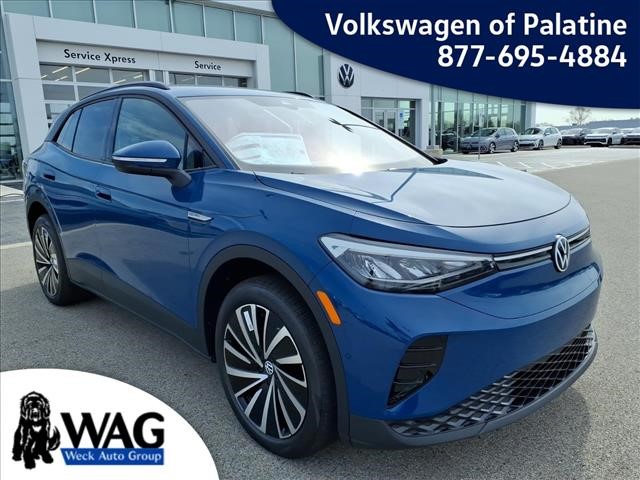
Shop the 2026 Volkswagen ID.4 near you
-

$48,591
New 2026 Volkswagen ID.4 -

$44,090
New 2026 Volkswagen ID.4 -

$44,933
New 2026 Volkswagen ID.4 -

$39,735
New 2026 Volkswagen ID.4 -

$44,592
New 2026 Volkswagen ID.4 -
$39,624
New 2026 Volkswagen ID.4
How a Heated Windshield Works
There are two main ways to accomplish electric windshield heating. One is a network of very fine conductive wires, often made with silver and other metals, that are embedded between the layers of glass — a system used by Land Rover, among others. The other involves a conductive film sealed between the glass layers. Volkswagen uses a silver-based layer between the glass along with wire at the base of the windshield to warm the wipers on the ID.4 — soon to be replaced by the ID. Tiguan — and ID. Buzz van. The silver layer offers a bonus in warm weather as a passive heat reflector, as well; VW says the silver layer can reduce the cabin temperature by up to 15 degrees more than regular tinted glass and cuts the load on the EVs’ climate system.
What’s Not to Like?
Heated windshields are great when you need them, but they have some downsides. While initial costs have come down, either type will be more expensive to replace if the glass becomes damaged. And if the heating system malfunctions, replacing the windshield may be required to fix it.
While wire-based systems are nearly invisible, for some drivers, once you see them, you can’t unsee them, and they become an annoyance. For other drivers, it’s not an issue. Only you can decide.
Either system puts metal between you and the world in front of you, metal that can act as a kind of Faraday cage — the type of shield many people use to protect key fobs or credit cards from unauthorized use — that can interfere with signals needed for toll-road transponders or radar detectors. Many heated windshields are designed with a small area of metal-free glass to accommodate such devices. The ID.4 has a small clearing to the right of the rearview mirror, for instance. Other types of reflective coatings or glass can also have this effect, and many toll-road systems have a list of vehicles that might need to use a bumper-mounted transponder or other workaround.
More From Cars.com:
- How Does a Car Defroster Work?
- Current Events: How Our Tesla Model Y and Jeep Grand Cherokee 4xe Handled Chicago’s Subzero Temps
- Which Cars Under $40,000 Have Heated Steering Wheels?
- Which Cars Have Cooled Seats?
- Heated and Cooled Cupholders Put to the Test
Related Video:
Cars.com’s Editorial department is your source for automotive news and reviews. In line with Cars.com’s long-standing ethics policy, editors and reviewers don’t accept gifts or free trips from automakers. The Editorial department is independent of Cars.com’s advertising, sales and sponsored content departments.


