






The 2026 Lexus IS 350 Is Nostalgia You Can Buy New: Review


What Car Shoppers Need to Know
- The IS 350 is Lexus’ long-serving compact sports sedan; the IS was last redesigned for the 2014 model year, and it hasn’t seen any major updates since.
- For 2026, the IS lineup is pared down to only the V-6-powered IS 350; the four-cylinder IS 300 and V-8 IS 500 have been discontinued.
- Despite its rather antiquated core design, the IS 350 holds its own as a relatively practical — yet still engaging — driver’s car; in some ways, its throwback nature is part of its appeal.
Is the 2026 Lexus IS 350 a Good Compact Luxury Sedan?
Depending on what you’re looking for, the Lexus IS 350 is a good compact luxury sedan — in no small part because traditional, rear-wheel-drive-based sedans aren’t exactly a thriving breed these days.
Related: Hybrid, All-Electric 2026 Lexus ES Is the Most Significant Lexus of the Decade: Review
The IS 350 is more traditional than most; its core design dates back to the 2014 model year, and it’s about the only sedan left to still use a naturally aspirated V-6 engine instead of a turbocharged four- or six-cylinder power plant. Some drivers prefer the smooth, linear power delivery of a naturally aspirated engine over a turbo engine, and Lexus’ veteran V-6 has a sterling reputation for reliability.
In terms of price, performance and poshness, the IS 350 hits something of a sweet spot in its class of competitors, which includes the Audi A5, BMW 330, Cadillac CT4 and CT4-V, Genesis G70 and Mercedes-Benz C-Class.


Expert Rating: 5.3/10
- Powertrain: 7/10
- Ride quality: 6/10
- Driver comfort: 5/10
- Passenger comfort: 3/10
- Interior quality: 6/10
- User interface: 7/10
- Cargo space: 5/10
- Value: 7/10
- Overall appeal: 5/10
- Fuel economy: 2/10
Our test vehicle: 2026 Lexus IS 350 F Sport Design AWD
Starting price (all prices include destination fee): $48,895
As-tested price: $51,944
Powertrain: 311-horsepower, 3.5-liter V-6, six-speed automatic transmission, all-wheel drive
EPA fuel-economy ratings: 19/26/22 mpg city/highway/combined
With the demise of the four-cylinder IS 300 and V-8 IS 500, the IS roster now consists solely of the V-6-powered IS 350, available in an entry-level (but nicely equipped) F Sport Design trim level and a slightly sportier, better-equipped F Sport. Both are powered by a 311-hp, 3.5-liter V-6, with rear-wheel drive or all-wheel drive. RWD models have an eight-speed automatic transmission, while AWD models get a six-speed automatic.
The IS 350 receives a freshening for 2026 that includes face-lifted front-end styling and a revamped dashboard that features an upsize digital instrument panel and infotainment screen, along with updates to the control layout.
Related Video:
What’s Good About the 2026 Lexus IS 350?
Stalwart V-6 engine: While it doesn’t have the low-end torque of a turbocharged engine — or the all-around muscle of its turbo six-cylinder rivals — the time-tested Lexus V-6 delivers smooth, confident power, with an exhaust note that rises to a nice growl at higher rpm.
Good balance of cornering performance and ride quality: The F Sport Design trim level doesn’t get the F Sport-tuned adaptive variable suspension that’s found in that higher trim, but it delivers respectably athletic handling with a crisp steering feel. Its ride quality is absorbent enough to be comfortable over most road surfaces.
Nice interior trimmings: The IS 350 features a high-quality interior with soft synthetic leather upholstery, clean contrast stitching and padded surfaces. It’s not as posh as, say, a Genesis G70 in its Prestige trim, but it’s still a classy cabin.
Relatively simple control layout: A revamped dashboard helps the 2026 IS 350 feel more up to date — especially its new digital gauge panel and infotainment touchscreen, both of which measure 12.3 inches, and a wireless charging pad at the leading edge of the center console. Thankfully, the IS’ new control layout largely sticks with physical buttons and switches, including easy-to-use climate-control toggles.
Comfortable front seats: The IS’ front seats strike an excellent balance between comfort and support. My backside was cosseted by the side bolsters, but those bolsters weren’t confining at all — ideal for a long road trip.
Decent value for the money: The IS 350 comes with a generous amount of standard equipment, and optioned-up examples still land in the low-$50,000 price range; that’s right in the ballpark of the average transaction price of a new vehicle these days. Among similarly powerful rivals, only the turbo four-cylinder Genesis G70 2.5T undercuts the IS 350’s price.
- ${price_badge()}
- ${ami_badge()}
- ${battery_badge()}${ev_report_link()}
- ${hot_car_badge()}
- ${award_badge()}
- ${cpo_badge()}
${price_badge_description}
${ami_badge_description}
The EV Battery Rating is based on this vehicle's current expected range relative to the vehicles expected range when new. ${battery_badge_text}
This vehicle is certified pre-owned, backed by a manufacturer warranty, and typically undergoes a rigorous multi-point inspection to ensure quality and reliability.
This vehicle is currently in high demand given its competitive price, desirable features, and overall condition, and may have a higher chance of selling quickly.
Shop the 2026 Lexus IS 350 near you
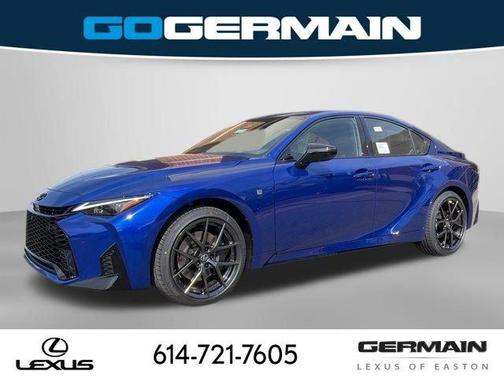


What’s Bad About the 2026 Lexus IS 350?
Underwhelming fuel economy: The reason the IS’ rival sedans have switched to turbocharged engines becomes apparent when you look at this Lexus’ EPA fuel-economy estimates: The IS 350 is rated at least a couple of mpg less than most of its competitors. The AWD version is rated 19/26/22 mpg city/highway/combined, and the RWD version is only a bit better at 19/27/22 mpg. Premium fuel is required, adding even more sting.
Cramped backseat space: Luxury-brand compact sports sedans aren’t known for their roomy backseats, but even by the standards of its class, the IS 350’s space is stingy. Rear passengers had best be well under 6 feet tall, especially if front-seat occupants need to adjust their seats all the way back like I do. My 14- and 12-year-old sons couldn’t fit comfortably behind me in the driver’s seat even on crosstown trips, so a road trip definitely wouldn’t work.
Cozy interior in general: In addition to its tight backseat, the rest of the IS’ interior can likewise be a bit too cozy for some buyers — again, a common issue among compact sports sedans. The front and rear door openings are all on the small side, making entry and exit more difficult for big and tall occupants. On our AWD test vehicle, a large hump that housed drivetrain components intruded into the driver’s footwell from the center console area.
Some common features are missing: The IS doesn’t offer some key features that are common among luxury-brand vehicles, including real leather upholstery, massaging front seats and a head-up display. Especially conspicuous by their absence were extending sun visors; the setting sun shone right into the side of my face on one drive because the sun visor couldn’t extend backward to block it.
Diminished choice: With the discontinuation of the more affordable IS 300 and the brawnier IS 500 models, the IS line no longer offers the powertrain choices that its rivals do. If you want something spicier than 311 hp in your sports sedan, you’ll have to go elsewhere.


Should You Buy the 2026 Lexus IS 350?
If you aren’t concerned with having cutting-edge technology — and can appreciate the character of a naturally aspirated engine (a now-rare feature) — the IS 350’s build quality and its balanced, sporty driving character still have a lot of appeal even if this car’s basic design is now 13 model years old. There are hints that luxury sports sedans might experience a revival in the near future, but those new-generation vehicles will likely lean further into technology and electrification — including a next-generation IS, if there is one. If you fancy this IS’ distinctive old-school essence, you’d best get one while you still can.
Cars.com’s Editorial department is your source for automotive news and reviews. In line with Cars.com’s long-standing ethics policy, editors and reviewers don’t accept gifts or free trips from automakers. The Editorial department is independent of Cars.com’s advertising, sales and sponsored content departments.


Latest news


